
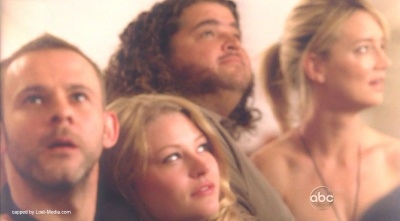
Heaven's waiting room
Time heals all wounded expectations, and now I’m ready to talk about it again. Here’s what Mark wrote:
Is this blog about the reason of LOST?
I thought the show was about reason, rational thought. The light was identity, expressed by the identity principal a=a, the primary example of which is existence exists. The narative is the continuity of the rational mind. The source is identity and the river is the river of individuals who have preserved the human race and rational thought. The island is reality. Everyone arrives there ‘by accident’ from ‘accross the sea’. False Locke is mysticism and collectivism.
Am I way off base? Why is no one talking about the reasons? The rational view that ‘everything that happens here happens for a reason’ and that we needed ‘everything that happened’ to get where we are, talking about LOST.
This blog was about the reason that the LOST-ies were brought to the Island, something I believed we would find out at the end. Instead, I believe, the show dodged the question.
We got two answers, both highly unsatisfactory.
The first answer was that the LOST-ies were brought to the Island to meet each other, to find the (literally) undying friendship and love they hadn’t been able to find in their previous lives. This had the unfortunate effect of reducing the whole amazing Island experience to the equivalent of a college mixer. If it was all about finding each other, there was no need for the Dharma Initiative, or the Island’s healing powers, or the dying pregnant women, or the Others, or Ben, or Jacob, or Widmore or any of it. They could have all just gone on match.com.
Also, even if it were true, as many fans of the ending say, that the show was “all about the characters,” the characters were so badly misrepresented at the end that it negated much of the emotional impact of what had happened before during the previous six years. Pairing Sayid with Shannon, in Heaven’s waiting room, rather than with Nadia, could only have been done by a writer tone-deaf to the emotional truths of the show.
The same thing about making the ending so Jack-centric. While the image of Jack closing his eyes was beautiful in its symmetry, in its mirror imaging of the opening, it was the wrong ending for the way the show had evolved over the years. After the pilot, Jack was never again credible as a hero or a leader, and his character quickly became less interesting than many of the others.
Sawyer, in a way perhaps unexpected by the writers when the show first started, showed himself to be both a better leader of the LOST-ies and a more credible romantic leading man than Jack. The extraordinary acting of Terry O’Quinn and Michael Emerson made their characters far more surprising and interesting than Fox’s. Most of all, the show was an ensemble effort, and turning the finale into Jack’s story missed the essential aspect of what the “character story” was all about.
The second unsatisfactory answer the show gave us was that the LOST-ies were brought to the Island by Jacob to keep the light going. But this doesn’t even make sense. If Jack was destined to save the world by putting the butt-plug in the light socket, then what were all the rest of the LOST-ies there for? Were they all just substitutes in case Jack got sick? And why these particular individuals?
Remember, Locke was always saying that they were ALL brought there for a reason. EACH OF THEM was brought there for a reason. It was their DESTINY.
In the end, though, it was all about Jack’s destiny, and the rest were reduced to supporting players, hanging out in church waiting for Jack to show up.
Mark wrote, “I thought the show was about reason, rational thought.”
I thought the show (up until, but not including, the ending) was about the tension between rational thought and faith.
“The light was identity, expressed by the identity principal a=a, the primary example of which is existence exists.”
Sorry, that’s over my head.
“The narrative is the continuity of the rational mind. The source is identity and the river is the river of individuals who have preserved the human race and rational thought. The island is reality. Everyone arrives there ‘by accident’ from ‘across the sea’. False Locke is mysticism and collectivism.”
I thought that Real Locke was the one who represented mysticism and faith. I don’t really know what False Locke was supposed to represent. The Devil? Non-denominational evil?
I don’t think the show was saying that collectivism is bad — in fact, just the opposite. The LOST-ies went from unhappy lonely individuals at the beginning to a happy group, all together at Heaven’s gate, at the end.
The source could be identity, but I think it was supposed to be something larger than that — I think it was meant to be whatever force breathes life into us. It might have been more convincing had it not looked so cheesy. 😉
Anyway, at this point, I’ve only seen the finale once, on the night it was aired. I turned on the rerun for about 10 seconds just to see if they had put on the “pop-up hints,” which they had, and then I turned it off.
But who knows, now that I can talk about it again, maybe I’ll be able to rewatch it some time soon-ish.
Is there anyone reading this who still cares about any of this? Do you still think about the finale, or have you put it behind you and let it go, as Christian Shephard urged us (via his speech to Jack) to do? Or maybe Christian’s advice was only meant for people who are already dead.
Screenshot from lost-media.com. Click on picture for original, then click through that for larger shot.









13 responses to “The LOST finale, revisited”